Friday, 12 October 2012

The 30 day challenge - Day 12 - Psychology Inspiration

Carl Rogers
After discussing a bit more about what I do and my inspiration in the last few days, I should leave a video of one of the most inspiring Psychologists who has impacted both my life and my Psychological philosophy, Carl Rogers. If you know anything about the Humanistic approach to therapy, this man is one, if not the, leading lights. His work is equally applicable in both mainstream and sport psychology. He puts care for the person (athlete in my case) at the core of what he does and believed that the counsellors role was to help the client to realise their potential (As Maslow also espouses in his 'hierarchy of needs' for self-actualisation). Thus, to help resolve any psychological issues with a person, the answer is contained within, and the role of the counsellor is to collaborate to help the individual eventually succeed on their own two feet.

When I lose my inspiration sometimes, it is Rogers to whom I come back to in order to find another gem of guidance to help myself. Hope you also enjoy!

Thursday, 11 October 2012

The 30 day challenge - Day 11. Success!

Whilst some have said to me 'I knew you'd do it' I didn't think I'd be adding the following to the blog. But just to say I've been offered a PHD position today at the School of Psychology at UCLAN, in Preston, Lancashire to start in the new year. It's something I've been looking into for a while now, and moves me further along the Sport Psych path in the direction I want. I'm pleased to say I'll be researching the prevalence and correlates of eating disorders and depressive symptoms in athletes for the next 3 years.

I would have written something more detailed, research based or longer today, but I hope you'll forgive me this once as I pop out to see friends for a celebration drink! 

Wednesday, 10 October 2012

The 30 day challenge - Day 10 - Thanks Joe!

I'm pretty devoid of energy and inspiration at the end of today. It has been a long day, I've been preparing during the day for a meeting tomorrow. So I'll keep this one brief... Yesterday I spoke about what it is that I do. Today I've been busy writing various sport psych pieces (away from this blog), hence why I'm only up for telling a brief tale! So I guess remembering why I'm doing this career path might be worth recalling.

Back in 2007 I was keen to get back to the field of psychology. Change was in the air. I'd been running a lot and getting fitter over the previous 5 years, watched my first Tour de France and become curious about the world of endurance. I had to have a bit of it, and when I explored Sport Psychology, something chimed inside. It wasn't long before I was checking out which MSc courses were nearby and what they covered. I took the course curriculum to my first marathon expo I recall!

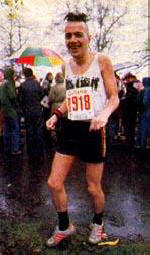
But what swung the return to the field wasn't meeting an inspiring athlete, entering competitive racing or trying to understand how cognitive behavioural techniques could benefit performance. It was going to the Curzon on Shaftesbury avenue and watching Julien Temple's documentary on Joe Strummer, The Future is Unwritten. I'd gotten into Strummer in the final years of his life when I lived briefly in Notting Hill, his old manor. I'd heard coma girl and his work with the Mescaleros. Just before I'd moved over to Spain in 2002 he passed away suddenly. Watching the film made his life make sense to me 5 years later. It really chimed with the need to shake things up, and his cry to 'get busy living' struck me.

It was the only film I saw as an adult where the audience clapped at the end. What I didn't know was that for 3 years he ran 3 marathons. In 1981 London, in 1982 Paris, and in 1983 London again. I'm probably a better marathon runner than Mr Strummer was (I think his claim of a 3:20 marathon is a bit of a porky), but I don't have a stitch of his musical talent. But I like his philosophy that the future is unwritten. I'll have a bit of that.

The 30 day challenge - Day 9. Why do I do what I do?

For today's blog I thought back earlier about why I started into my career as a Sport Psychologist after almost 10 years of online design and web experience. Having done my undergrad Psychology degree at the University of Manchester, I wasn't sure which flavour of Psychology I wanted to pursue. Clinical? Occupational? Educational? Something else? As a naive 22 year old, I didn't know or feel confident enough which path to follow. Rather sensibly, I stepped back and decided to try something else and return to the field when I felt ready and the answer had presented itself. This was 1998, and by luck/design/serendipity, I managed to score a job in the nascent industry surrounding the web, and fortunately built myself a fairly decent career first as a developer and designer and then as a manager and strategist. Having been involved in online since the beginning, I've got a better than average understanding of what makes compelling content and how it works, but more importantly can communicate this in a straightforward manner and manage teams to create good 'stuff' that everyday folk can use and find helpful.

What really makes me tick though, is getting behind peoples motivations and specifically about their interest and application related to sport. If you ask people what got them into a technical career, you may get a short story from a developer about an interest in computing through a relative or just their natural curiosity. Get someone to talk about why they participate in sport, and you'll see someone come alive. Ask them what it means to them? Well, you may want to sit down and let them talk for a while!

As Sport Psychologists and coaches, often reminding people why they first started participating in exercise and competition can have a very beneficial effect, regardless of how well they are performing currently. It taps into something that can easily be forgotten as people incorporate their training into everyday life like shopping, laundry and putting out the recycling. But making people stop for a moment and realise how far they may have come, as part of a 'therapeutic process' or just talking, is very powerful.

Within Sport Psychology, there are two main ways in which we earn our money. The majority of work you see in books, online in advice like this and in consultations, relates to enhancing athlete performance. Helping take the techniques, predominantly from the Cognitive Behavioural approach, such as visualisation, self-talk, goal setting and relaxation strategies into a sport context has helped a lot of athletes improve their performance. The second strand of psychological support in Sport relates to Psychologists help with clinical issues, such as coping with transition and loss, eating disorders, depression, anxiety and other such serious problems that occur in 'normal' life. This is an area I am keen to get into and explore, as these weren't covered in much depth in my MSc, but I was very into during my bachelors and is an area of interest in my adult life. I've worked with and fundraised for MIND, the mental health charity, and believe that there is a long way to go in breaking down prejudice about mental illness in society.

Training to help with such conditions needs to be more rigourous and consider other needs beyond improving the already existing psychological state (such as espoused by positive psychologists). In all cases with athletes, you have to consider the care and well being of the athlete - which is why you'll never find me discussing individual cases on here of people I am working with.

It could be considered that whilst performance issues are generally additive to an individual (italics deliberate); clinical issues are fundamental to an individuals well-being from a health point of view. This makes intuitive sense, but not that many Sport Psychologists concern themselves with the clinical model of care as most athletes just want advice on 'how they can get better' in terms of performance - which this blog tries to address.

So to answer the question that is the title of this post, what do I do and believe? Well, regardless of what someone comes to me with (performance or clinical problems), I put the client at the heart of what I do. I take a stance that their well being is my primary concern and that if I am seeing them for consultations, I treat the individual first and the sportsperson second. I fundamentally believe (and evidence shows this to be the case) that if you get the first part right, the second should follow.

I take a humanistic approach, so I see the person as a whole, which is why I don't just isolate the performance away from a person and try and why I offer on here advice and help, for free, to try and spread sport psych findings to a broader audience. I will admit that I do spend an inordinate amount of time worrying about whether I've covered my claims/research/advice adequately to satisfy the regulatory bodies that I am a member of so that when you read advice, it is both accurate and safe to your well being. If I put you at risk, I'm not doing my job properly. In my academic world, I have to reference everything I claim, whereas I have some leeway writing on this medium. However, I'm clear about what I offer as advice, state my maturity and experience (note a 'Trainee Sport Psychologist' and not a fully fledged one!), but I abide by the rules, and knowing how many readers I have, I am trying to share my experience and knowledge to assist those interested parties in the endurance field about what mental strategies, techniques and theories I can share to help.

I would say that the advice I give is thoroughly researched, checked and that I caveat wherever necessary. The advice on here is generic enough to be shared and tested, and if you need anything more specific, you should contact me directly for a consultation or more detail. Hope that helps outline what I do. This is what us in the caring profession may call 'reflection' - its not a bad thing to do for yourself regardless of your discipline! Look it up online, and I recommend checking Gibbs model.

Monday, 8 October 2012

The 30 day challenge - Day 8. Music & impact on performance

I'm working on a couple of music related posts for the 30 day challenge as its a big part of running conversations with people I know and more broadly, away from just endurance plays a big part in the modern day presentation of sport, both live and broadcast.

At athletics meetings a steady stream of music is played throughout the day apart from during actual races. At football and rugby matches, when a team scores, many a club PA blasts music, and of course in America during their major sports of baseball and basketball, the game is almost continually accompanied by music.

On a more day-to-day level for us non-elites, whether a cyclist, runner or rower you are often asked: Do you train to music? As a runner I'd say I get asked most months whether or not I do by someone different! For runners the 'do you/don't you question' can be divisive, with some swearing they have to, others swearing they hate both running with music AND those who run with music!

Aside from the very obvious concerns about safety and consideration that presents itself with runners on the street, someone in the Runners World article said: "Why is this even an issue? The con arguments are weak and opinionated." But if I put my coaching hat on for a minute, I would say that if an athlete came to a track session and wanted to wear their headphones on reps, I'd pull rank and say, "No way" as I think it's unfair on the other runners and from a more practical point of view, you can't hear splits or instructions that might be shouted out, and if you're doing your runs quick enough, logistically the equipment would be flapping everywhere! Or at least it should be...

Other than that, if an athlete chooses to wear their music device on long runs, or tempos or on the treadmill, I see no harm (other than to themselves!) and actually see the motivational aspects... In fact, I set my PB in marathon when I allowed myself to listen to stimulating music in the last 6 miles of the Barcelona race in 2010.

From a scientific point of view, it has been shown that listening to music helped triathletes increase their endurance by up to 15% (though with respect to Karageorghis & Terry, 2010, I'd be keen to really review the methodology of their study to see how this figure was reached as I believe reaction to music is such a subjective phenomenon and we need to consider all the other aspects of an individuals training cycle and what impact that could have on endurance capacity). I'll do this in my next post.

In the video, Kostas outlines how the effect reported on subjective perception of exertion was that music helped the feeling of effort compared to non-music conditions. From a similar angle, whilst music may mask some cues and help intensify the feeling that masks pain in the RAS, I believe - anecdotally I'll admit - that music should provide a strong dissociative technique. As I outlined in the post on testing overriding the Central Governer, if an endurance athlete tunes into their favourite music, there is a strong chance this stops negative mental effort being drawn towards feelings of fatigue and possible slowing. That said, evidence from research on the benefit of associating to pain and discomfort (presumably in athletes not listening to music), elite athletes are better able at handling pain and not letting it affect their times i.e. tuning into pain aids performance! Similarly research shows that less psychologically skilled and non-elite athletes use dissociative techniques to distract them, though this usually accompanies less satisfactory performance.

So whats the take home? Should you train with music? Personally, I do think it is subjective and people  should give training with and without music a go in the conditions outlined. For a lot of people it is really motivating and also pleasant to train with tunes. I still don't feel like I've got to the nub of 'will it help my performance compared to if I don't listen to music?' and I still have questions I have to ask - which is why I'll be trying to interview Kostas during this month.

If you have an opinion or a question, please leave it below in the comments section. This is a topic I will be coming back to at least twice before the month is out.

Sunday, 7 October 2012

The 30 day challenge - Day 7. Rest and relaxation

Whilst trying to complete this 30-day challenge in 30 days, it seems I've given myself yet another task to keep my mind 'on' each day, when I know deep down the benefits of rest, both for sport and life in general. Perhaps without following each to the letter :-)

It got me thinking about how to build in 'active rest' to an athletes schedules. In endurance, whether running, cycling, triathlon or whatever, there is always a taper period to let your body recuperate after a punishing training schedule before your main event. Keeping athletes to stick to cutting back hours of exercise can be problematic for coaches and psychologists with their charges, as they don't know quite what to do with themselves when they've ordinarily 'built up' for the previous few months.

My friend and running partner Enrique recently put me on to this article in Runners World that  advocated cutting down miles but throwing in some more quick bursts of speed to the final week before races, which I adhered to prior to Bristol. I liked it as it felt like I was ticking over and could feel how good the benefits of training had been, so pre-race I knew I could deliver. But as I said in Day 4 of this challenge (putting yourself in the best mental state), its really important to try and relax the body and brain with more sleep. As a night owl I naturally fight against this but know it does help the body repair and helps with producing better performances. For athletes in training, 7 to 8 hours a night sleep is recommended to let the body repair properly.

But what I want to put out there to readers is how long should you allow for recovery after races? There is a general rule of thumb that for a marathon to leave running for a month. I definitely like a fortnight off, but find a month gets me too twitchy. Equally for a half marathon, does the recovery time halve? I don't necessarily feel that myself, and know that the body is not pushed anywhere near to the same level of effort as when a full endurance race is run.

Generally I find that its best to ease yourself back to different exercise that allows you to experience the nice feeling of a workout without the same pressure on joints, sore muscles and the like. So this week, one full week after a half marathon and a couple of lightish 6 milers, I will be swimming, cycling and doing yoga and stretches. As a trainee sport masseur I really feel I need to know this information in more depth, but know that what the 'right advice' is will differ from person to person.

However, for those of you who may push themselves hard across the different endurance disciplines, what do you do? How long do you leave exercise?/breaking back into less intense workouts?
Do you have tips and advice (preferably evidence based!) that you want to share?

S

The 30 day challenge - Day 6. Testing the Governer

I went out early yesterday in the Autumn sun and clocked what I call a wind-up run. This is a sort of stripped down tempo run of 5 or 6 miles, where you start at jog pace and then increase the pace at mile or time intervals. In this case, I did a couple of 7.5 minute miles then upped my pace ever quicker each consecutive mile home along one of my regular runs (see here: http://connect.garmin.com/activity/230415686). I was mulling over  in those first few miles what I could write about, and thought about what I'd heard and thought about the 'Central Governer' theory that I'd discussed the previous day.

I focused in on what Noakes and the presenters on the first Marathon Talk interview had described in terms of the feeling of fatigue and what makes you slow and how endurance athletes have to 'fight against' this temptation in order to post personal best times. For the next couple of miles I decided that I'd try an ever increasing speed each mile and see how I felt and whether I could sustain the effort I was giving. Of course, in interval sessions this is normal behaviour, but I was looking to try and rate how I subjectively felt and just how uncomfortable I found it.

I know this was highly anecdotal and unscientific but given I was a bit sluggish yesterday and hadn't planned for the run, I thought I might find it tougher. In reality, it wasn't an absolute cakewalk, but it wasn't as bad as I imagined I'd feel, and I did feel great by the end of the run.

The best advice I implemented in my thinking came from Martin and Tom earlier in their Marathon Talk episode where they talked about techniques to push on when you feel that pace may be beginning to flag. Some are based on psychological research findings, others are just ones they adapted. What worked for me was:

1) Put on your 'Man suit' - This is a self talk strategy to really 'Zip up your mantra' to deliver the time you want to be running at. A call to 'man up' and not let the pain or fatigue affect your cruising speed. They mentioned how Bruce Tulloh had used a technique in his running where he would ask himself on a scale of 1 to 10 how he was feeling and whether he could continue. If the answer was anything less than the 10 where everything would be ok, he would push on! I tried this and it definitely made me realise near to home to keep at it. The logic that this approach takes is: Pain is temporary, deal with it.

2) Thinking ahead: (Or in Psychological terms: Visualisation). If you try and think yourself ahead of where you are currently running and seeing yourself achieve your goal, how will that make you feel? Think about the reasons why you're pushing yourself to do the activity you're doing. In both of my PBs for marathon and 10k, I've really spent the time the night before the race trying to visualise how I will feel. Usually, when I've come to run those races I can say that the reality of the running wasn't as bad as the visualised race I ran through in my mind the night before!

3) Tune in/tune out - Association again. Are you counting from 1 to 100? or in Paula Radcliffe's case 1 to 200? Also, are you wasting mental energy overthinking your performance? If you take a mindful approach to your work (staying in the moment; renegotiating non-judgementally your race with yourself), then you should actually end up thinking less about your race and actually just focusing on your running. This I definitely need to practice, and think it is very powerful.

Overall, I was trying to challenge how I felt physically and just saying to myself, "well this isn't as easy and comfortable as the first mile. But its not that hard," and in so doing was able to gently up the pace and relax into my run. Again, though I try and work on the mental side of performance, I think the take home I would say from the run is, practice more on the mental side. I've got the sessions per week in a regular routine now, in this off season before Christmas, I'm going to sit down and work on these and other mental strategies more methodically. I'll share these as I work through them and find out more from research.