Wednesday, 17 October 2012

The 30 day challenge - Running with Kenyans. The interview Part 2


Yesterday I introduced part 1 of my interview with William Hill Sports Writer of the Year nominee, Adharanand Finn, author of Running with the Kenyans.  Like a lot of runners, coaches and sports scientists, he was keen to find out what the repertoire of factors was that make the Kenyan runners the elite in the World. Is there a recipe for success that us other runners can follow?

Adharanand thought that overall Kenya has a more relaxed culture than the West, though their timekeeping for  running is taken seriously.  He felt Kenyan runners are more relaxed mentally and this transfers to their running style and gait. Which he feels help longevity in a race. By not focusing on pace and the watch and instead pacing through feel, Adharanand has tried to mimic this style in his own running. I know from my own experience training with a 2:45 runner in Manchester and Nick and Phoebe at Running with us, who try and instil in their runners this ability; the benefits experienced mentally are good. From a psychological point of view this ties with theories of working memory that suggest freeing up ‘space’ in your thoughts reduces anxiety and thus mental energy.

But! trying to implement this is easier said than done. As the body fatigues, us runners spend time having to motivate ourselves through the same mind to maintain race pace! Adharanand refers to a technique he started to use having observed Joan Benoit wearing a cap pulled over her eyes to maintain a steely focus into the middle distance. By ‘blinkering’ and switching off as much as possible, Finn feels this has (as well as running many more miles and interval training!) improved his race times. 

He also refers to using a dissociative technique of using a mantra for when he’s fatiguing in a race. Despite being a meditation practitioner, in races he finds applying the meditation difficult. 

Overall, what have we so far identified in that 'recipe' of successful Kenyan running?
  • Rest and relaxation
  • The impact of running form and forefoot striking
  • Intense focus (both in terms of attitude to training and in runs themselves)
  • The ability to cope well through focusing on running pace 
  • Training at altitude/Lots of miles run in packs
  • Resilience via motivation
He also looks at the element of culture that impacts runners from a young age that differentiates them from other competitors, including their neighbours in Ethiopia.

Beyond the benefits of ‘working’ full time on running at training camps and having lots of sleep, the culture Finn speaks of is the rural upbringing the top Kenyans have (note, no runners from Kenyan cities are in the highest echelon). The culture of running to and from school from age 6 to 16 lays down a strong base for distance running that Western counterparts have problems matching. This ties with Ericsson’s theory of 10,000 hours of practice for professional athletes brought to prominence in Malcolm Gladwell's book ‘Outliers’

When I put him on the spot to list the reasons why he thinks his running is better thanks to the Kenyan experience (he went from doing his first marathon in Lewa whilst there in 3:20 to finishing the last New York Marathon in 2:55), Finn reckons it is down to learning to pace himself better – but that he has a long way to go on that front 'cos he still goes out too fast! Running form – he did try a lot of barefoot running in his time out in Iten and most importantly staying relaxed, yet simultaneously focused when running.

Finally I ask him what is next. The day job at the Guardian is keeping him busy, and his running times keep coming down but due to the success of this book, another is a possibility. I look forward to seeing what comes next! Hope the advice and psych evidence in these two posts have been of interest. As ever, any feedback or questions are welcomed. 

Monday, 15 October 2012

The 30 day challenge - Running with Kenyans. The interview Part 1.


For those who don't know Adharanand Finn, he is an assistant production editor for the Guardian. As a young man, he was a pretty good 10k and half marathon runner. By his own admission during his twenties, like a lot of us, he lost his fitness. Move forward to his 30s and he rediscovered his running mojo, to the point where he wanted to explore whether he could learn and improve his times and fitness by shipping his family to Iten in Kenya's Rift valley and train with some of the fastest endurance athletes on the planet. His first post on the Guardian blog, makes for interesting reading. And is about as scary as it sounds!

His book, Running with the Kenyans, covers his experience over the 6 months,  and tries to understand the magic blend of circumstance and ingredients that makes "the Kenyans" the dominant distance racers. 

I like the fact that the book outlines his own insecurities, doubts, races and training where he drops out of races from exhaustion or slowing down. Through the book there is a redemptive quality that shows Adharanand's journey and understanding of what he learns. I'm not giving anything away (or surprising any readers) by saying that his times and speed improved through the experience. 

Calling him early on Monday at his Devon base, I outline what the point of my blog is - to bring some of the theory and research from Sport Psychology and coaching to a wider audience, and ask him to explain what he learnt the most and had reflected on from the experience. Finn says that whilst he was in Kenya he found out about the physical training that athletes put themselves through. Since returning to the UK, Finn has reflected more about the psychological skills that the Kenyans use. Though by his own admission, the majority of them don't think about how Western runners would recognise. As with a lot of what Adharanand and I discussed, we had to make some sweeping generalisations about "the Kenyans" during our conversation for brevity's sake. But please take this with a warning that what we discussed isn't applicable to all Kenyan runners.

What Finn means by this is that a lot of the Kenyan runners (remember that in some cases at training camps there can be up to 300 runners on one track) don't have 1 to 1 training. David Rudicha (the World record 800 metre runner) does, but he is one of the exceptions. What Finn really was getting at is that in Europe and America, runners tend to be more time obsessed. From experience, as part of a few running clubs, I'm as bad as anyone and certainly see this in the groups that I run with.

Garmin at the ready, watching progress on your times and splits. It's part of the culture we live in. I asked whether Kenyan culture is more laid back and less obsessed with punctuality. Finn said that for social occasions and most of life this was certainly the case, though Kenyan runners work hard to be on time for training and if you're late for a run, everyone will have left. At the start line of the big training sessions everyone will wear a watch but once they've started, the watches aren't looked at for the rest of the intervals. Indeed, during long training runs, a nominated driver in a truck will get to the 5k split points and shout out the time from the previous marker and whether the runners need to speed up or slow down.

In Finn's opinion, it is the "feel" that Kenyan runners aim towards. They focus hard and "feel" their way to the running speed they need. And they spend their training sessions working at that groove. Even on Fartlek runs where watches dictate how long you run for, he said that often they won't count how many intervals are actually run.

Fundamentally, through the training techniques, altitude, motivation, background and approach, Finn felt that Kenyan runners were overall more mentally relaxed in their running than their Western counterparts. I posited that the elite level in Kenya often don't work in 'normal' 9 to 5 jobs and that they  sleep up to 18 or 20 hours (according to Peter McHugh, my coach and who is mentioned in the book), which must help compared to most runners in the West. But even allowing for this, Finn felt that from a young age, Kenyan runners have a more relaxed running style which he feels helps the physical function of the body. I've mentioned rest previously in my posts, but this seems to take the benefits even further.

Tomorrow I publish part 2 of my interview with Adharanand, where we discuss focus, coping and how he feels his running has benefitted and what he thinks are tips that can help from his experience that you may be interested in.

The 30 day challenge - Day 13 - Daren Bartlett interview

O Zelador & Cadencia director (& jiu jitsu coach) Daren Bartlett
The last couple of days have been really enjoyable. But I have not had the time to stick to the 30 day regime. However, I'm back in the flow today! There is this entry and I was happy this morning to interview the Guardian's Adharanand Finn (@adharanand), author of 'Running with Kenyans'. So I think a couple of "double days," should put me back on track.

Last year I had the privilege of interviewing Jiu Jitsu coach and film director, Daren Bartlett about the role of Sport Psychology in his discipline. Currently Daren is stuck in the cutting room, finishing off his latest work on a film about the history of the Gracie brothers academy and Jiu Jitsu in Rio. In the past he has indulged his love affair with Brazil by making the Capoeira documentary, O Zelador, and for the last World Cup, Cadencia, which also tells a tale of Brazilian culture, kite flying and carnival.

We met in Soho in February, and I asked him about the role of Sport Psychology in his coaching of Jiu Jitsu and martial arts fighters. I reason that though this blog is skewed towards runners, across all sports there are certain coaching and psychological skills are consistent that we should try and learn from each other.

For instance, Daren thinks the role of a coach is to:

  • Instil a sense of belief in an athlete; 
  • Perfect the technique of the art they are practising, and 
  • To condition the body for the rigours that an athlete will be put themselves through. 

Sound anything like endurance training to anyone?

When I put him on the spot about how much of Jiu Jitsu coaching he believes is physical and how much mental, Daren believed that before a fight, coaching and training is about 80% physical. But within the hour before a bout, about 80% mental, and once in the ring, 100% mental!

I asked him how he conditions his athletes to help prepare them mentally, in the hope I might be able to share some advice with readers. At first he said that he assists with athletes having the confidence within themselves that they've done all the training possible through their schedule. If not, they'll feel as if something is missing. He has to show them as a coach he has confidence in them to deliver, as when they are in a fight they're on their own, undue stress can be caused. By instilling belief (self-efficacy) in his athletes, he believes the athlete will feel that they can deliver under the pressure of competition.

I asked Daren how he goes about instilling belief in an athlete in the week and hour pre-fight. He described how by pushing the right buttons in his fighter, he can then help them look at ways to take their opponent out of their comfort zone. I asked how this is achieved. Daren responded that he tries to assist with dealing with all eventualities that can arise in a fight to minimise surprises. The reason for so doing is that if a fighter gets surprised by an opponent, doubt and anxiety are more likely to creep in (and thus a fight can be lost).

It is Daren's opinion that winning in Martial arts in comes down to which fighter has the greatest motivation and appetite. In similarity to preparing for endurance events, if an athlete has prepared fully, they won't 'burn' valuable mental energy and will be focused solely on the job in hand. Daren retold the experience of seeing a professional Jiu Jitsu fighter in training take on 4 different fighters in the ring, one after the other, in order to replicate a 'super athlete' in a tough fight. By mimicking a tough opponent who appeared to be totally fresh as the athlete became fatigued, he set up the different conditions experienced by a fighter, e.g. strength; speed; technique. By undertaking such a heavy stress load in training, it was felt the fighter would benefit in a real fight as they would be better used to different tactics at different points in a fight. Thus the athlete would obtain greater self-belief.

In their history Jiu Jitsu and a lot of the Martial arts have been amateur in terms of competitive level, but overall Daren believes sport science will begin to play a greater role in preparation and in fights. From experience he believes the athlete with the greatest knowledge and preparation will win and thus disciplines within combat sports will evolve as mental skills training and other scientific techniques are applied.

Though I realise some of the elements of this post are specific to martial arts, I am sure there are examples from that show how an athlete, regardless of discipline has to get into the right psychological state for peak performance, and at the very least, it can make you think about how you can go the extra mile in psychological training and research to help you raise your game. Any questions specifically about fighting or how to try and get 'into the zone' for peak performance are welcomed.


Friday, 12 October 2012

The 30 day challenge - Day 12 - Psychology Inspiration

Carl Rogers
After discussing a bit more about what I do and my inspiration in the last few days, I should leave a video of one of the most inspiring Psychologists who has impacted both my life and my Psychological philosophy, Carl Rogers. If you know anything about the Humanistic approach to therapy, this man is one, if not the, leading lights. His work is equally applicable in both mainstream and sport psychology. He puts care for the person (athlete in my case) at the core of what he does and believed that the counsellors role was to help the client to realise their potential (As Maslow also espouses in his 'hierarchy of needs' for self-actualisation). Thus, to help resolve any psychological issues with a person, the answer is contained within, and the role of the counsellor is to collaborate to help the individual eventually succeed on their own two feet.

When I lose my inspiration sometimes, it is Rogers to whom I come back to in order to find another gem of guidance to help myself. Hope you also enjoy!

Thursday, 11 October 2012

The 30 day challenge - Day 11. Success!

Whilst some have said to me 'I knew you'd do it' I didn't think I'd be adding the following to the blog. But just to say I've been offered a PHD position today at the School of Psychology at UCLAN, in Preston, Lancashire to start in the new year. It's something I've been looking into for a while now, and moves me further along the Sport Psych path in the direction I want. I'm pleased to say I'll be researching the prevalence and correlates of eating disorders and depressive symptoms in athletes for the next 3 years.

I would have written something more detailed, research based or longer today, but I hope you'll forgive me this once as I pop out to see friends for a celebration drink! 

Wednesday, 10 October 2012

The 30 day challenge - Day 10 - Thanks Joe!

I'm pretty devoid of energy and inspiration at the end of today. It has been a long day, I've been preparing during the day for a meeting tomorrow. So I'll keep this one brief... Yesterday I spoke about what it is that I do. Today I've been busy writing various sport psych pieces (away from this blog), hence why I'm only up for telling a brief tale! So I guess remembering why I'm doing this career path might be worth recalling.

Back in 2007 I was keen to get back to the field of psychology. Change was in the air. I'd been running a lot and getting fitter over the previous 5 years, watched my first Tour de France and become curious about the world of endurance. I had to have a bit of it, and when I explored Sport Psychology, something chimed inside. It wasn't long before I was checking out which MSc courses were nearby and what they covered. I took the course curriculum to my first marathon expo I recall!

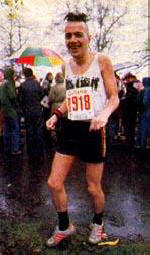
But what swung the return to the field wasn't meeting an inspiring athlete, entering competitive racing or trying to understand how cognitive behavioural techniques could benefit performance. It was going to the Curzon on Shaftesbury avenue and watching Julien Temple's documentary on Joe Strummer, The Future is Unwritten. I'd gotten into Strummer in the final years of his life when I lived briefly in Notting Hill, his old manor. I'd heard coma girl and his work with the Mescaleros. Just before I'd moved over to Spain in 2002 he passed away suddenly. Watching the film made his life make sense to me 5 years later. It really chimed with the need to shake things up, and his cry to 'get busy living' struck me.

It was the only film I saw as an adult where the audience clapped at the end. What I didn't know was that for 3 years he ran 3 marathons. In 1981 London, in 1982 Paris, and in 1983 London again. I'm probably a better marathon runner than Mr Strummer was (I think his claim of a 3:20 marathon is a bit of a porky), but I don't have a stitch of his musical talent. But I like his philosophy that the future is unwritten. I'll have a bit of that.

The 30 day challenge - Day 9. Why do I do what I do?

For today's blog I thought back earlier about why I started into my career as a Sport Psychologist after almost 10 years of online design and web experience. Having done my undergrad Psychology degree at the University of Manchester, I wasn't sure which flavour of Psychology I wanted to pursue. Clinical? Occupational? Educational? Something else? As a naive 22 year old, I didn't know or feel confident enough which path to follow. Rather sensibly, I stepped back and decided to try something else and return to the field when I felt ready and the answer had presented itself. This was 1998, and by luck/design/serendipity, I managed to score a job in the nascent industry surrounding the web, and fortunately built myself a fairly decent career first as a developer and designer and then as a manager and strategist. Having been involved in online since the beginning, I've got a better than average understanding of what makes compelling content and how it works, but more importantly can communicate this in a straightforward manner and manage teams to create good 'stuff' that everyday folk can use and find helpful.

What really makes me tick though, is getting behind peoples motivations and specifically about their interest and application related to sport. If you ask people what got them into a technical career, you may get a short story from a developer about an interest in computing through a relative or just their natural curiosity. Get someone to talk about why they participate in sport, and you'll see someone come alive. Ask them what it means to them? Well, you may want to sit down and let them talk for a while!

As Sport Psychologists and coaches, often reminding people why they first started participating in exercise and competition can have a very beneficial effect, regardless of how well they are performing currently. It taps into something that can easily be forgotten as people incorporate their training into everyday life like shopping, laundry and putting out the recycling. But making people stop for a moment and realise how far they may have come, as part of a 'therapeutic process' or just talking, is very powerful.

Within Sport Psychology, there are two main ways in which we earn our money. The majority of work you see in books, online in advice like this and in consultations, relates to enhancing athlete performance. Helping take the techniques, predominantly from the Cognitive Behavioural approach, such as visualisation, self-talk, goal setting and relaxation strategies into a sport context has helped a lot of athletes improve their performance. The second strand of psychological support in Sport relates to Psychologists help with clinical issues, such as coping with transition and loss, eating disorders, depression, anxiety and other such serious problems that occur in 'normal' life. This is an area I am keen to get into and explore, as these weren't covered in much depth in my MSc, but I was very into during my bachelors and is an area of interest in my adult life. I've worked with and fundraised for MIND, the mental health charity, and believe that there is a long way to go in breaking down prejudice about mental illness in society.

Training to help with such conditions needs to be more rigourous and consider other needs beyond improving the already existing psychological state (such as espoused by positive psychologists). In all cases with athletes, you have to consider the care and well being of the athlete - which is why you'll never find me discussing individual cases on here of people I am working with.

It could be considered that whilst performance issues are generally additive to an individual (italics deliberate); clinical issues are fundamental to an individuals well-being from a health point of view. This makes intuitive sense, but not that many Sport Psychologists concern themselves with the clinical model of care as most athletes just want advice on 'how they can get better' in terms of performance - which this blog tries to address.

So to answer the question that is the title of this post, what do I do and believe? Well, regardless of what someone comes to me with (performance or clinical problems), I put the client at the heart of what I do. I take a stance that their well being is my primary concern and that if I am seeing them for consultations, I treat the individual first and the sportsperson second. I fundamentally believe (and evidence shows this to be the case) that if you get the first part right, the second should follow.

I take a humanistic approach, so I see the person as a whole, which is why I don't just isolate the performance away from a person and try and why I offer on here advice and help, for free, to try and spread sport psych findings to a broader audience. I will admit that I do spend an inordinate amount of time worrying about whether I've covered my claims/research/advice adequately to satisfy the regulatory bodies that I am a member of so that when you read advice, it is both accurate and safe to your well being. If I put you at risk, I'm not doing my job properly. In my academic world, I have to reference everything I claim, whereas I have some leeway writing on this medium. However, I'm clear about what I offer as advice, state my maturity and experience (note a 'Trainee Sport Psychologist' and not a fully fledged one!), but I abide by the rules, and knowing how many readers I have, I am trying to share my experience and knowledge to assist those interested parties in the endurance field about what mental strategies, techniques and theories I can share to help.

I would say that the advice I give is thoroughly researched, checked and that I caveat wherever necessary. The advice on here is generic enough to be shared and tested, and if you need anything more specific, you should contact me directly for a consultation or more detail. Hope that helps outline what I do. This is what us in the caring profession may call 'reflection' - its not a bad thing to do for yourself regardless of your discipline! Look it up online, and I recommend checking Gibbs model.